
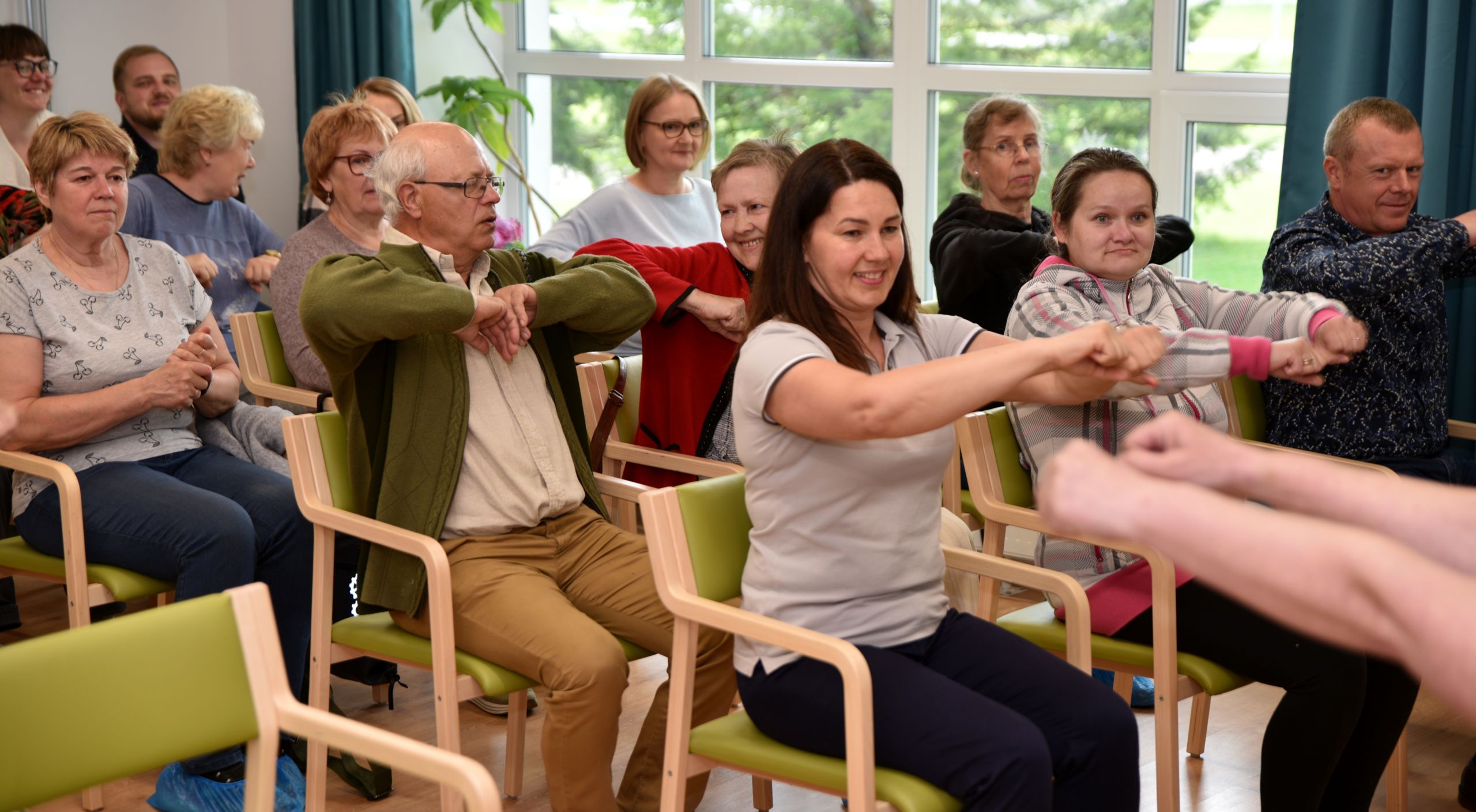
In Käru Südamekodu, located in Türi municipality, Järva County, about 90 elderly residents live there daily. Positive energy greets visitors right from the open door — manager Heili Burmeister, chaplain Olavi Laur, caregivers, and other staff make sure no one feels unwelcome while gently reminding guests that they are, after all, visiting the residents’ home.
The care home, located in a building that once housed the local sovkhoz office, has been renovated into a cozy and modern environment, with a new wing built specifically for care services. Behind the house, there’s a beautifully designed garden with Tori-style gates, where residents can walk, sunbathe, and enjoy gardening.
The day began with light morning exercise led by activity instructor Anne Sillamaa. The home’s manager Heili Burmeister gave a tour, while Martin Kukk, a member of the Südamekodud supervisory board, spoke about the organisation’s homes across Estonia and the upcoming care reform.
The care reform sparked the most questions from visitors. The goals and funding models of the reform — topics already addressed by the Ministry of Social Affairs and the Social Insurance Board — were discussed in detail. Most interest centered on the new funding model: how personal co-payment amounts will change and how the cost of general care services will be shared between residents and local municipalities.
According to Martin Kukk, one of the most welcome changes is that the reform will standardize and define quality requirements for care homes, including a minimum number of care staff. Although this will lead to a shortage of workers, there is hope that Estonia will begin to allow more foreign labor, which the sector urgently needs. Käru Südamekodu’s manager confirmed that Ukrainian refugees have already been working successfully at Käru, quickly adapting and building good relationships with residents.
The discussion also focused on home care services — the reform lays the groundwork for expanding services aimed at people who can still live at home but need some extra support. Most elderly people prefer to stay in their own homes for as long as possible, so developing such services is essential. Following Finland’s example, it’s clear that services like day care and personal assistants are both needed and highly valued.
TV3 in Käru Südamekodu – What will the care reform, coming into effect on July 1, bring?

Südamekodud AS
Register code 14168513
Karjavälja st 4, Tallinn 12918
info@sudamekodud.ee