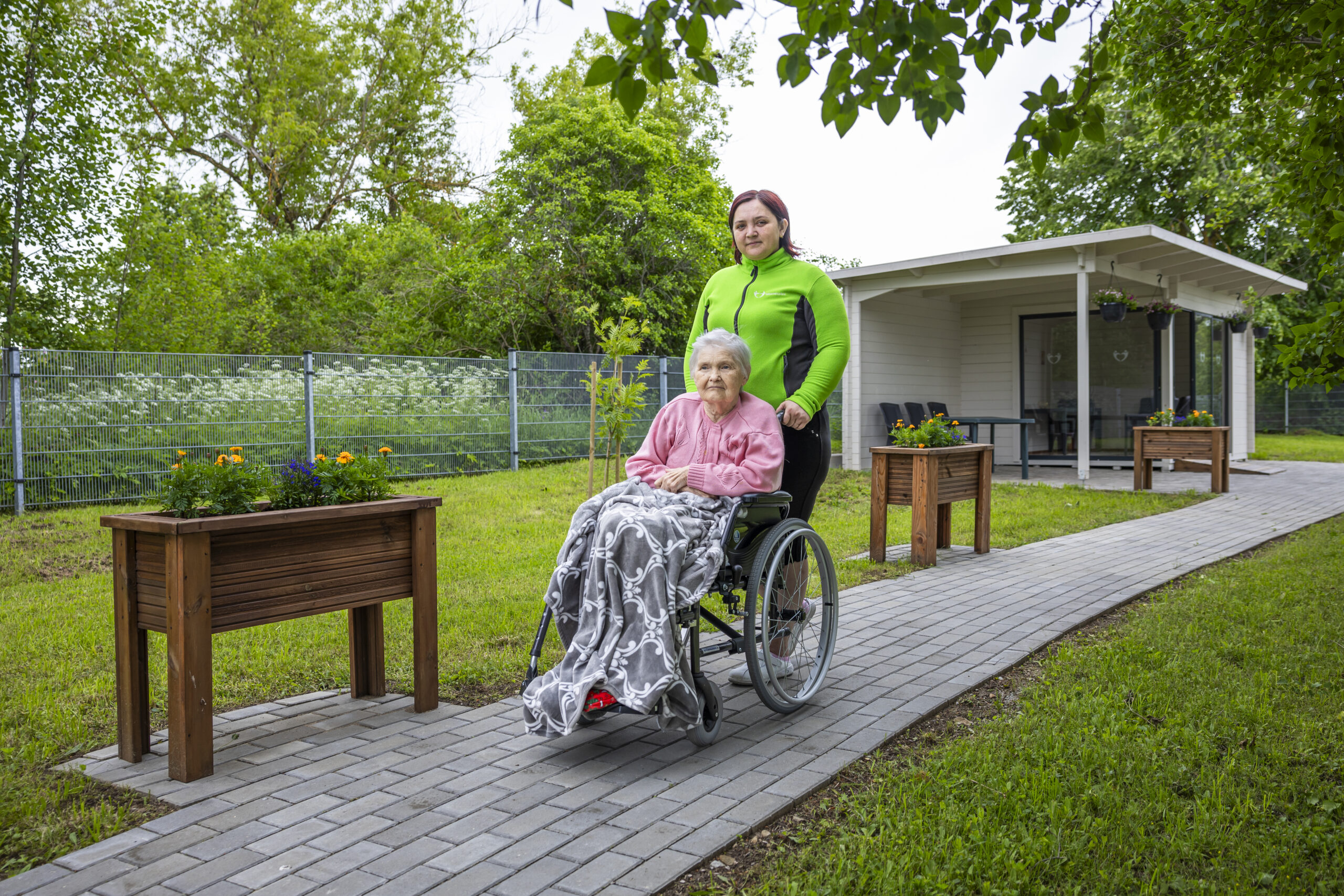
Caring for older people is not only about skills, but also a subtle art of understanding and sensing people. Every older person has their own story, habits, and moods, which on some days may mean stubbornness, frustration, or fatigue.
Experienced caregivers know that arguing does not help at all. Gentle guidance and calmly reaching an agreement works much better. If a person refuses to wash or come to eat, they are not forced, but given time and offered an alternative: “Let’s do it a bit later” or “Let’s start with the hands and see how it goes.”
Often, difficult situations do not require big solutions, but small, mindful techniques that help reduce tension and maintain connection. Experience teaches how to stay calm and support older people even on challenging days.
Some concrete tips for coping.
- One important “tip” in a care home is routine. When days follow a similar rhythm, older people feel more secure and know what to expect. This also reduces confusion and anxiety.
- A calm pace and explaining things in advance create a sense of safety. When a caregiver explains what they are doing and proceeds step by step, the older person feels more involved and less anxious.
- Humour is just as important — a warm joke or laughter can instantly soften a tense situation.
- Joy-giving activities are just as important as care. When favourite activities take place at a regular time, they create anticipation and joy even on difficult days.
- The environment often calms more than words. If an older person is anxious, it is worth looking at the surrounding space — is there too much noise, bright light, or distracting objects? Soft lighting, less background noise, and familiar details help reduce anxiety.
- Familiarity creates a sense of safety. Photos, personal belongings, music, and scents help older people feel safer even when verbal communication is difficult. Music and sounds of nature can be important triggers of positive emotions.
- Supporting independence is essential: during dressing and washing, older people should be allowed to do as much as possible themselves — this helps maintain self-esteem and dignity. Elastic waistbands, simple fastenings, and comfortable shoes make daily activities easier — comfortable and simple clothing helps prevent frustration from difficulties.
- If an older person is irritated or says something that is not true, it is not always necessary to correct them or start an argument. It is more important to acknowledge their feelings and offer a sense of safety. Calm words like “I can see that this worries you” help a person feel understood. Often, redirecting attention also helps, for example by suggesting: “Let’s have some tea together.”
Caregivers also pay close attention to small changes: body language, facial expressions, silence, or restlessness. Often, these say more than words. On difficult days, it helps to remember that bad moods or stubbornness are not personal toward the caregiver — they often reflect fatigue, pain, or fear.