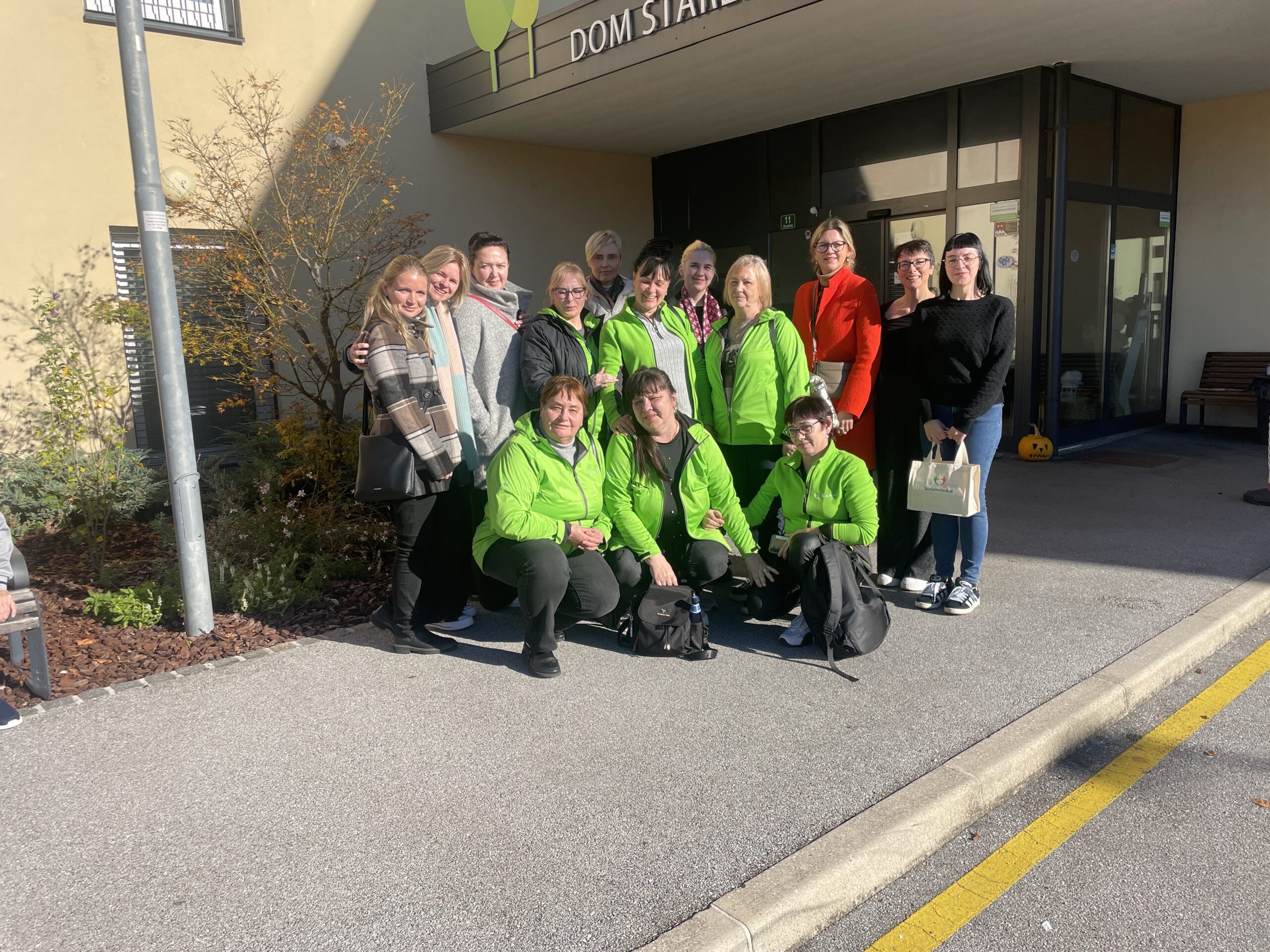
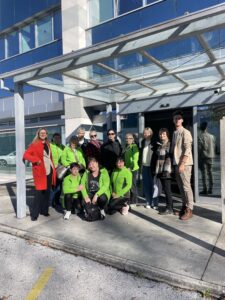
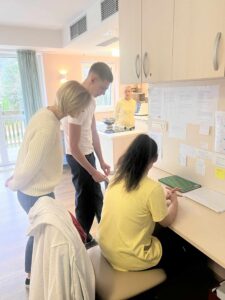
 Nurses and care managers from Südamekodud recently returned from a learning mobility trip to Slovenia under the Erasmus+ programme, where they shadowed local care homes, learned about the social care system, and brought back many ideas for developing our own homes. This was already the third Erasmus+ study trip — previously our teams have visited Malta and Portugal. In total, 30 Südamekodud employees will gain international experience.
The aim of the learning mobility was to understand how care services are organised in Slovenia, what daily work processes look like, and which best practices could be adapted to care work in Estonia.
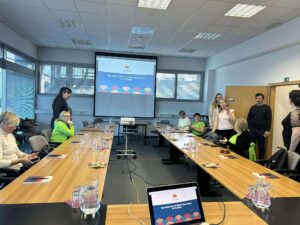
Our team was welcomed by Skupnost socialnih zavodov Slovenije – the Association of Social Care Institutions of Slovenia – which provided a thorough overview of the country’s social care system and ongoing reforms.
A strong healthcare and therapy focus stood out in the work of Slovenian care homes:
each care home employs a physiotherapist, occupational therapist and social worker,
care work is led by a supervising nurse (with a university degree), not a care manager,
daily care is provided by assistant nurses (with specialised secondary education),
family doctors and psychiatrists visit the homes regularly.
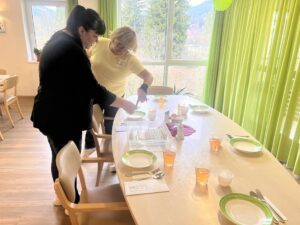
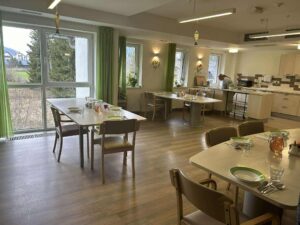
In addition, residents are offered five meals a day — three main meals and two snacks. The food is plentiful, home-style and beautifully served, supporting both the joy of eating and a homely atmosphere. Many homes also have their own café.
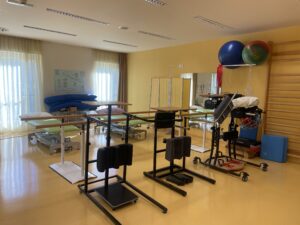 Movement and independence — Slovenia’s daily work culture
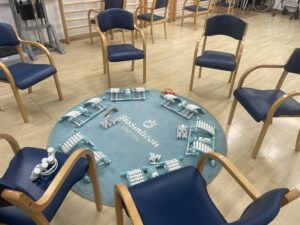
One of the areas given special attention in Slovenian care homes is movement and physical activity.
There are very few fully bedbound people — only those whose doctor has prohibited movement stay in bed. All others are assisted at least once a day to get out of bed to maintain muscle strength and independence.
This approach also confirmed our own experience: the work of physiotherapists and occupational therapists is invaluable in supporting resident wellbeing, mood, and independence.
 Work organisation and challenges — much similar to Estonia
Like Estonia, Slovenia also faces workforce shortages. Support comes from students, interns, volunteers and sometimes families.
A surprising fact was that at night, large care homes (148–216 residents) operate with only one care worker and one assistant nurse on duty.
Documentation in Slovenia is still largely paper-based, but the shift towards digital solutions is progressing quickly.
One of the key parts of the mobility trip was a visit to the ZOD Ljubljana home care centre, which serves nearly 1,500 seniors living at home every month. Visits are carried out depending on the district: by bicycle, public transport or the organisation’s car.
In many situations, volunteers also provide support, demonstrating the important role of the community in Slovenian care.
In addition to job shadowing, our team also experienced Slovenian culture — visiting the Postojna caves, the seaside town of Piran, and tasting local dishes. Just like in Estonia, people in Slovenia are warm, open and collaboration-minded.
 What did the study trip give us?
The Slovenian experience confirmed how important it is to:
a team-based and holistic approach to care,
the daily role of therapeutic services,
supporting residents’ movement and independence,
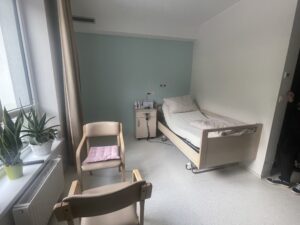
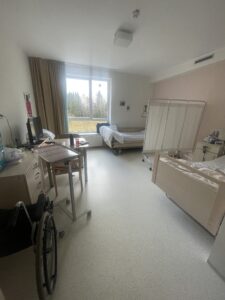
creating a homelike and dignified environment,
shared learning and exchange of best practices.
Our employees brought back a wealth of new knowledge and ideas on how to create an even better, more human-centred and joyful home for our residents in Südamekodud.
The learning mobility in Slovenia was full of warmth, professional growth and inspiration. Together, we move forward to maintain and develop care in every day of Südamekodu life.
The study trip is funded by the European Union. The views and opinions expressed are solely those of the authors and do not necessarily reflect the official position of the European Union. Neither the European Union nor the grant provider can be held responsible for them.

Südamekodud AS
Register code 14168513
Karjavälja st 4, Tallinn 12918
info@sudamekodud.ee